
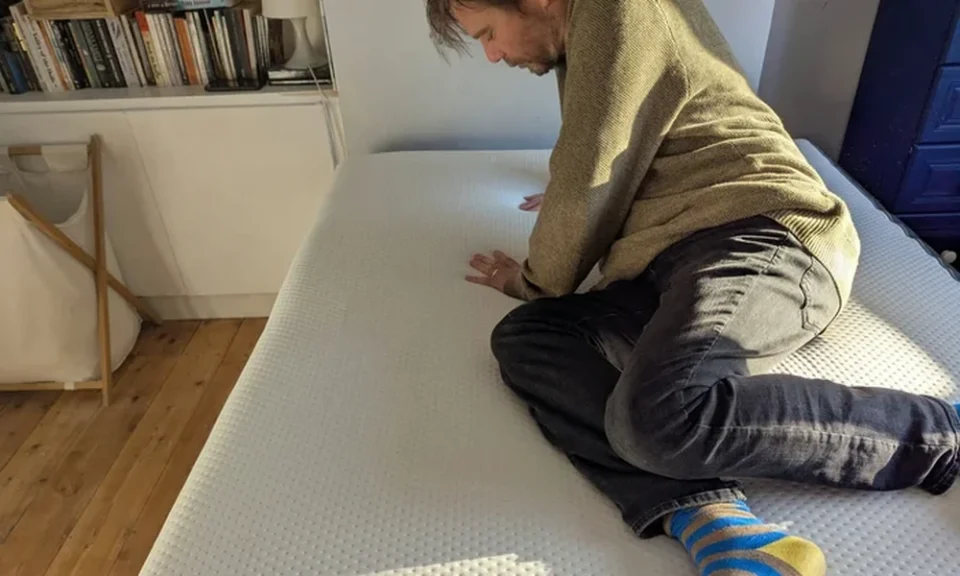
Fifteen minutes. That is how long the average person spends lying on a mattress before spending a thousand dollars on it. I know because I did it twice, and both times I picked wrong. The first was too soft and swallowed me by year two. The second was firm enough to feel like a wrestling mat.
So here is the promise: by the end of this piece you will know exactly what to do in a store, in what order, and what to ignore. You will test five positions, check two numbers, and walk out with a decision you can defend instead of a decision you hope works out. No brand loyalty required, no salesperson veto.
Why Buying a Mattress Online Fails Most People
You cannot feel a spec sheet. Foam density, coil count, and layer thickness tell you something about durability, but they say almost nothing about how your shoulder will feel at 2 a.m. on a Tuesday. That gap is why so many people order a bed in a box, sleep on it for three weeks, and start quietly researching return policies.
The other problem is language. “Medium firm” means completely different things to a mattress brand in South Carolina and a mattress brand in Denmark. There is no enforced standard, and the Federal Trade Commission has spent years pressing manufacturers on the claims they make about their own products. Translation: trust your body more than the label on the end of the bed. Your shoulder is the only honest reviewer in the room.
What Should You Actually Do During a Store Visit?
Treat the visit like a test drive, because that is what it is. Cars get thirty minutes and a highway loop. Beds get three minutes and a polite nod. Flip that ratio and you will outshop 90 percent of the people walking the same floor.
The Five Position Test
This is the part most shoppers skip, and it is the only part that matters. Lie down and hold each position for a slow count of thirty.
- On your back. Slide one hand under your lower back. If there is a gap you could park a phone in, the bed is too firm for you. If your hand is pinned, it is too soft.
- On your side. This is the position where shoulders and hips take the hit. Ask yourself one question: is my spine a straight line, or am I sagging into a hammock?
- On your stomach. Most people never test this, and stomach sleepers need a flatter surface than anyone else. If your hips sink and your lower back arches, move on.
- Sitting on the edge. Edge support is where cheap beds give themselves away. Sit down hard on the corner and see whether you slide off or stay put.
- Rolling from one side to the other. You do this several times a night without thinking. If it takes effort in the store, it will wake you up at home.
Do all five on the same bed, then repeat on two more. By the third mattress your body starts ranking them on its own, and that ranking is more reliable than anything a salesperson can tell you.
Two Numbers Worth Remembering
Bring a tape measure and a phone. Measure the length of your body from shoulder to hip, then check that against the model you like. Couples should also check the sleeping surface width, not the frame width, because frame specs include the rails.
Here is my stance, and I will defend it: pick the mattress that feels slightly too firm in the store, not the one that feels perfect. Almost every bed breaks in and softens within the first few months. The plush model that feels like a cloud on day one is the model you are fighting in year three. Slightly firm is the safer bet, and a mattress topper can add softness later for far less money than a new bed.
The Showroom Trap Nobody Warns You About
Showroom floors are climate controlled and quiet. Your bedroom is not. It runs warmer, it holds pets and dust, and it gets a body that has been awake for seventeen hours.
So test for heat on purpose. Lie still for a full five minutes in the position you actually sleep in. If your back starts feeling damp, the foam layers are trapping heat, and that will not improve at home. This is one reason traditional innerspring and hybrid designs still hold their ground with hot sleepers.
And here is a habit that separates good shoppers from lucky ones: ask what the return or exchange window actually covers. According to the Sleep Foundation, the industry baseline for a trial period sits somewhere in the range of a month or more, which exists precisely because a single showroom visit cannot predict how you will sleep on night thirty. Get the policy in writing before you pay, and ask whether delivery and removal fees come out of a refund.
How to Read a Salesperson (and When to Tune Them Out)
Most people working a mattress floor are not trying to trick you. They are trying to hit a number, and that number is usually tied to specific brands. That is a normal job, not a scam.
What you want is diagnostics, not recommendations. A useful question sounds like this: “I sleep on my left side and I wake up with a numb arm. What on this floor changes that?” If the answer is a specific bed with a specific reason, listen carefully. If the answer is whatever is on promotion, thank them and keep walking.
Commission-free floors exist, and they change the whole conversation. At a place like Mattress Sleep Center in College Station, the pitch is no-pressure guidance plus enough floor models to compare side by side, which is the setup you want. Ninety plus beds on one floor is not a gimmick. It is a control group. Where else can you test a plush, a medium, and a firm back to back within ten minutes and actually feel the difference in your hips?
If you cannot find a commission-free floor nearby, build your own version of one: visit two stores on the same day, ask the same three questions at each, and compare the answers instead of the sales pitches.
One more thing. Check where the bed was made and who services the warranty. A local shop that handles delivery, setup, and old mattress removal is worth a small premium over a warehouse that drops a box at your curb. You will call someone the day the frame squeaks. Make sure that someone picks up the phone.
Your Pre-Purchase Checklist
- Wear loose clothing and slip off your shoes. You cannot judge a bed in jeans and boots.
- Spend at least fifteen minutes on your top contender, not thirty seconds on ten of them.
- Test with the pillow you actually sleep on, or a store pillow of the same loft.
- Ask for the trial period, the exchange terms, and the delivery fee in writing.
- Confirm the foundation or adjustable base requirement. Some warranties depend on it.
- Bring your partner if you share a bed. Two people change the whole calculus.
Then sleep on the decision for a night before you sign. Not literally. Just let it sit. A bed you keep thinking about the next morning is usually the right one, and a bed you talked yourself into is usually not.
A mattress is one of the few purchases you will spend a third of your life inside, and it is one of the only ones where the store visit is the entire test. Use the five positions, watch for heat, ignore the labels, and buy slightly firmer than feels perfect. What is the last thing you bought that deserved this much attention and did not get it?
