
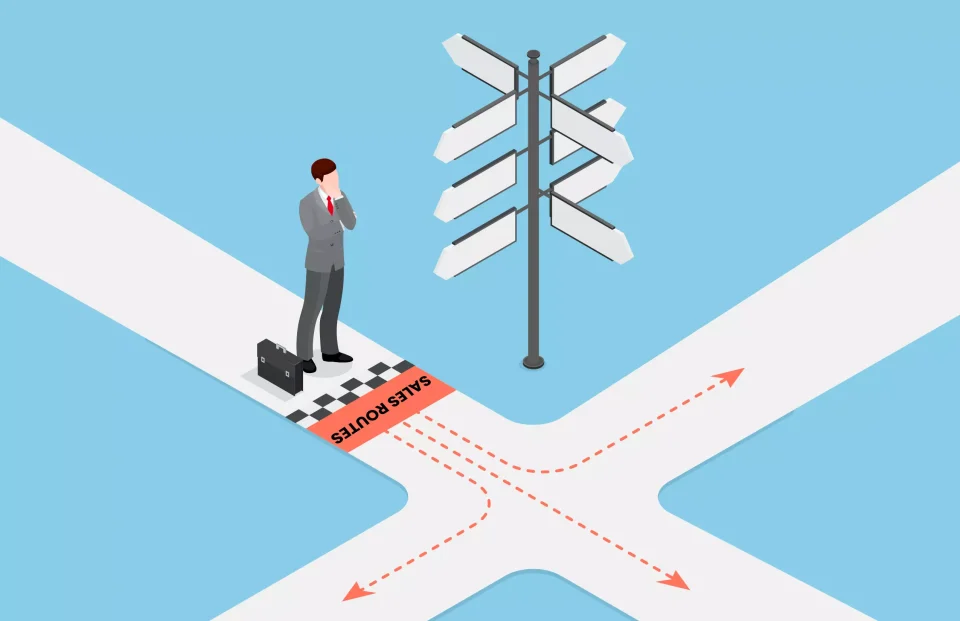
Field sales doesn’t happen at a desk. It happens in parking lots, on highways, in quick conversations between stops, sometimes while a rep is trying to remember the name of the last customer before walking through the door. That’s why the idea of route sales software only works if it fits into that kind of day. Find out more about route sales software and top tools on the market in this guide. Because the real challenge for most teams isn’t effort. It’s organizing all the movement that already exists across a territory.
Most reps don’t lack motivation. They lack time. A rep might spend hours driving through a region with dozens of potential customers nearby, yet only visit a handful simply because the route wasn’t planned in a way that made those stops obvious. Nobody notices at first. The day still feels busy. But the inefficiency quietly builds over time.
Route sales software helps teams move through territories more logically
Route sales software begins fixing that problem by making geography easier to understand. Instead of planning visits based on memory or a rough idea of where accounts are located, reps can see the territory laid out clearly. Nearby stops become visible immediately. A route begins forming that follows the shape of the area rather than bouncing randomly across it.
That clarity makes a difference. Imagine finishing a meeting and seeing three nearby accounts within a few minutes of each other. Without a system, those opportunities might never appear during the day. With the right tool, they become obvious next stops.
Small changes like that create noticeable results. Less backtracking. Fewer unnecessary miles. More visits squeezed into the same amount of time. Over the course of a week, those small efficiencies can easily add another handful of customer conversations that wouldn’t have happened otherwise.
Route sales software visibility helps managers understand territory activity
Managers often discover another advantage once route sales software becomes part of the routine. The territory starts revealing patterns.
When visits and travel routes appear in one place, it becomes easier to see which areas receive regular attention and which ones might be slipping through the cracks. Some clusters of accounts might be getting plenty of visits while other regions go quiet for weeks at a time. Not intentionally.
Just because the territory grew larger than anyone realized. With that visibility, managers can guide small adjustments. A few nearby accounts might get grouped into the same route. A rep might shift the direction they travel through the territory each week.
Nothing dramatic. Just smarter movement. And the best part is that reps don’t need to completely rethink how they work. They’re still visiting customers, building relationships, following up on opportunities.
They’re simply doing it with a clearer sense of where they should go next. That clarity removes a surprising amount of friction from the day. If you want to see how route planning fits into a platform built specifically for field teams, you can check it out here: https://repmove.app/.
